|
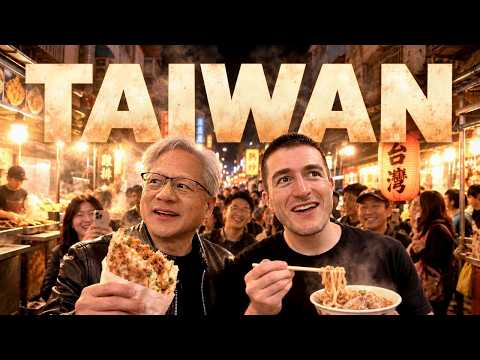
In "The FULL Taiwan Experience," Lex Fridman and Jensen Huang tour Taiwan and discuss why the island anchors the global semiconductor supply chain, producing more than 90% of the world's most advanced chips. Their conversation covers Taiwan's engineering culture, the history of TSMC and UMC, NVIDIA's trust-based relationship with TSMC, export controls, and how the U.S. might re-industrialize. It matters because modern computers, GPUs, and AI data centers depend on this supply chain, so the episode offers a rare look at how geopolitics, manufacturing, and partnership shape the AI economy. Main Topics and Key Ideas:Taiwan's Semiconductor Dominance and Engineering Culture: Lex Fridman frames Taiwan as the producer of more than 90% of the world's most advanced semiconductors, and attributes that dominance to a culture and education system that prize engineering. Jensen Huang credits the ecosystem's generosity, humility, and willingness to work very hard. Computex Keynote and NVIDIA Hardware Announcements: Footage from the Taiwan trip covers Jensen Huang's Computex keynote and NVIDIA hardware. The Grace Blackwell rack was described as 100% liquid cooled with no cables or hoses (versus 80% last generation), with assembly time cut from two hours to five minutes and full production underway. Taiwanese Night Markets and Street Food: Jensen Huang and Lex Fridman eat their way through Taiwan's night markets, sampling oyster pancake, shave ice, pork floss rice, sesame balls, grass jelly, turnip cake, and durian, which Lex says smells bad but tastes good. Huang recalls night market trips with his parents as a childhood treat and says a cook's knife cut his face when he was about five, yet he still loves the markets for the food, the hardworking vendors, and their generosity. Lex highlights the "Taiwanese way" of vendors sharing with customers as a trip highlight. NVIDIA Employee Gathering and Jensen Huang's Humility: Thousands of NVIDIA staff and guests share food, drinks, and dancing at an employee gathering, and Huang personally celebrates with the crowd. Booth tours at Computex drew several thousand people in line. Huang frames his humility as a choice to celebrate others and want them to succeed, saying "Goodwill is not a zero-sum game," and advises partners to "always leave something on the table" for long-term success. Early Taiwan Chip History: KT Lee, Philips, and IBM-Compatible Chipsets: KT Lee's 1950s push through Taiwan's science and industries ministry to bring technology manufacturing to the island drew Morris Chang back and set the stage for the industry. IBM's decision to open its IBM-compatible chipset specifications let Taiwanese firms such as TSMC and UMC build motherboard chipsets that powered the PC industry, including for Michael Dell's company. The TSMC Partnership and Morris Chang: When SGS Thompson required licensing its IP, young NVIDIA sought a foundry elsewhere. After a voicemail to TSMC's U.S. office went unanswered, Huang wrote a long letter, and Morris Chang called back around 6:30 p.m. and invited him to Taiwan. Huang chose TSMC over UMC because Chang stressed corporate governance, integrity, and partnership, and promised "we would jump through hoops for you." Huang's principle is that in chip manufacturing you choose who to work with rather than what to buy, since tightly specified contracts become brittle, and NVIDIA has worked with TSMC for about 30 years on that trust-based footing. Export Controls and the Technology Flywheel: Huang argues that export controls should be applied selectively, because technology is a force multiplier and the long-term goal is a flywheel of technology leadership, wealth, install base, and platform reach. Fridman counters that some assets, such as refined rare earths and weapons-related technology, are legitimately withheld, and that every nation has a sovereign right to decide how to use its advantages. Both agree the line to avoid is moving from healthy competition between friends into enmity, and Fridman argues English as the dominant technology language gives the U.S. a "global flywheel advantage" it must not take for granted. Re-industrializing the United States: Huang argues the AI boom is the best chance to invest in the grid, sustainable energy, and manufacturing in the United States, because demand is large enough to make domestic production affordable, and says "this might be the perfect time to re-industrialize the United States." He describes Taiwanese companies building FABs in Arizona, sending many engineers, and training U.S. workers because local talent is scarce. He presents the NVIDIA-TSMC partnership as a model for how this kind of trust-based cooperation can work. Who Should Watch This Video?Semiconductor and AI infrastructure professionals, since the episode traces how TSMC, UMC, and NVIDIA's supplier relationships were built and why the supply chain is concentrated in Taiwan. Policymakers and trade analysts, since Huang and Fridman debate the limits of export controls, the difference between healthy competition and enmity, and the U.S. case for domestic manufacturing. Founders and business leaders, since Huang's stories about choosing partners on trust, leaving value on the table, and the reasoning behind NVIDIA's TSMC bet offer practical lessons on partnership. |
||
|
You get this because you subscribed at superpodcatch.com · Unsubscribe |